David Lader, Martial Artist and Teacher

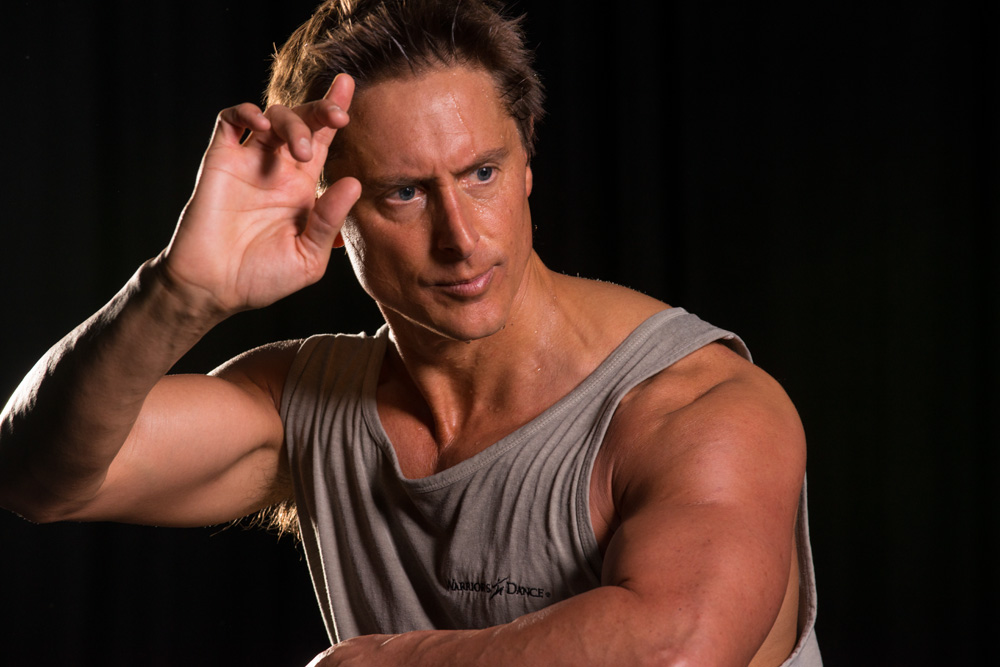
David Lader
What’s the difference between “wellness” and “fitness?” This question reflects a key area of interest for professional Martial Arts Instructor David Lader. Mr. Lader has been teaching martial arts throughout the U.S. for over almost 30 years, and his unique approach to instruction has been the result of an unusually diverse background in martial arts as well as various other movement disciplines. Mr. Lader has also brought intellectual, philosophical, and even spiritual components to his classes through the years. His concern for providing safe, efficient, and productive learning environments has led him to closely examine what we commonly refer to as “wellness” and “fitness…”
David Lader and Sustainable Training
David Lader suggests that the notion of “fitness” tends to describe more of a sport-specific training paradigm, while “wellness” is the result of broader lifestyle choices that result in an overall sense of health and vitality. While the terms generally differ in their connotations, they are certainly not mutually exclusive. Lader’s concern is that martial arts training geared specifically for sport and/or demonstration is more likely to result in overuse injuries and connective tissue damage. He says that our obsession with “looking good” and winning can become a profound distraction from more responsible, moderate, and effective approaches to physical training that result in fitness and wellness. Lader is passionate about designing intense, demanding, and uncomfortable training regimens that practitioners can handle well into their senior years – he calls this type of training “sustainable training.” He says “Older folks want to play too, and they need to be able to defend themselves as well!”
A Holistic Approach to Martial Arts Practice
David Lader’s multi-faceted background in martial arts, dance, and exercise physiology has led him to develop martial arts training curricula that emphasize core strength, proper recovery, and good nutrition. His classes are designed to develop integrated, functional strength throughout the entire body. He says the major muscle groups must “sing in harmony…” Students must work on flexibility, stamina, strength, speed, and coordination. They learn that they can continue to strengthen muscle tissue as long as they live. Lader describes muscle tissue as a “renewable resource.” He describes connective tissue, on the other hand, as a “non-renewable resource.” He helps students learn proper posture and biomechanics such that they will preserve connective tissue, develop strong muscles, and move gracefully and powerfully in the process. According to Lader, “to move gracefully is to move efficiently, and to move efficiently requires lifelong training in breath control and coordinated limb movements ‘through the core.’ Subsequently, practitioners can move with great speed and focus while, at the same time, be very mentally calm and poised. This sort of ‘moving meditation’ can be an extremely pleasant spiritual experience while, simultaneously, proving deadly for the attacker who has mistaken the practitioner for a victim…”
David Lader, A Student
David Lader graduated from Cornell University in 1986 with an interdisciplinary Bachelor of Arts Degree in Cultural Anthropology, Cross-Cultural Psychology, and Sociology. His focus areas were Native American, Japanese, and South Asian cultures. His coursework brought him to The University of London’s School of Oriental and African Studies in 1985, where he was awarded First Class British Honors in South Asian Religion and Buddhist Studies.
Mr. Lader often speaks about his life-long fascination with the history and propagation of martial arts systems throughout the world. He has also read extensively on the subjects of early human civilizations and the migration of modern humans out of Africa over the last 50,000 years.
Mr. Lader earned his Master’s Degree in Counseling Psychology from the University of Phoenix in 1998 and went into private practice shortly thereafter. He studied many martial arts systems through the years including Muay Thai, Hapkido, Jutitsu, Karate, Gung fu, Akido, Judo, Savate, Capoeira, Tai-Chi, Hsing-I, and Pa Kua. He also studied various Yoga styles as well as classical ballet at the Royal Ballet School in London. Lader also became a certified personal and group fitness trainer with the American Council on Exercise (ACE). This background in exercise science, biomechanics, and human anatomy helped him to develop his own martial arts training protocols and, ultimately, his own system – Warrior’s Dance.
David Lader, Founder of Warrior’s Dance
While David Lader was actively teaching traditional Tae Kwon Do at The Dojang, A Martial Arts Community in Tucson, he also began developing Warrior’s Dance, his signature training system. Warrior’s Dance was, essentially, the culmination of Lader’s unusually diverse background as a martial artist, dancer, academic, and professional counselor. From about 1995 until the present, Warrior’s Dance has become far more than a system of self defense – it is now a way for practitioners to become physically powerful and highly functional into their senior years… It is an ongoing study of “internal” martial arts, wellness, and general fitness. For David Lader and his students, Warrior’s Dance is both an intellectual inquiry and an artistic expression. It is about fellowship and community, and it is a place to safely explore what efficient movement looks like and feels like. Lader says, “Warrior’s Dance students without a sense of humor don’t last. Those who take themselves too seriously don’t last. Those who whine and ‘play victim’ have no place, for they are ‘toxic.’ Warrior’s Dance is deadly serious and totally playful, depending on what is appropriate in the moment.” Lader writes, “The difference between ‘childlike’ and ‘childish’ is simply a matter of timing. There’s a time to laugh, a time to weep, a time to play, and a time to train. Anyone can learn to fight. Knowing when to engage, or not, separates impulsive young soldiers from wise old warriors.”
So what does David Lader do when he isn’t working?
David Lader lives in Tucson with his wife Åsa and their two young children, Linnea and Noah. When David is not relaxing with his family, teaching Warrior’s Dance, or working with Rovin LLC, his real estate development company, he’s busy with many hobbies and interests… David is a student of classical piano, and his favorite composers are Beethoven and Chopin. He also loves to sing and play guitar, Native American flute, and blues harp. David enjoys abstract photography, wood carving, reading historical fiction and early human history, writing, travel, cycling, swimming, hiking, cinema, and cooking. David is also very open about his daily spiritual practice, and he spends time each day engaging in what he refers to as “conscious contact,” which he explains is really about being “present” and “awake.”
Peace…

